

Football · May 16, 2026
Chelsea vs Manchester City: FA Cup Final Review
A tight Wembley final turned on one instinctive touch and a long spell of defensive patience.
Football · May 16, 2026
A tight Wembley final turned on one instinctive touch and a long spell of defensive patience.
Cup finals often promise spectacle and deliver caution. Chelsea and Manchester City produced a version of that familiar Wembley pattern: two sides with enough quality to hurt each other, but also enough respect to avoid reckless openings. The result was a final decided by timing rather than volume.
For City, the appeal of the win was its restraint. They did not overwhelm Chelsea with a long list of chances. Instead, they kept asking the same question: could Chelsea defend every cross, every rotation and every run across the front of goal for the full match? Eventually, the answer was no.
The opening phase had City trying to settle the ball while Chelsea looked for moments to break the rhythm. Neither team wanted the match to become stretched too soon. That made the first half feel like a study in positioning, with both midfields working hard to close the passing lanes that would have turned the game loose.
Chelsea’s best spells came when they could push City backward and force defensive clearances rather than controlled exits. But those spells did not last long enough. City had a habit of slowing the match again, drawing Chelsea back into shape and then restarting their possession work from a calmer base.
The decisive moment arrived when Erling Haaland found the channel and City finally moved the Chelsea defence at the right speed. Antoine Semenyo’s finish was not about a long preparation or a perfect shooting stance. It was a striker’s reaction, a small piece of improvisation inside a match that had given very little away.
That finish changed the atmosphere immediately. Chelsea had to become more direct, while City were able to lean into the part of their game that often wins finals: killing space, keeping the ball when possible and defending the box with the match clock in mind.
The most interesting part of City’s performance was how little they needed to overcommit. They protected themselves against Chelsea’s counters, trusted the ball to return to them and waited for the one high-quality action that could decide the final. It was not romantic football, but it was cup-final football of a very practical kind.
Chelsea competed well in the middle and were never passive, yet their attacking phases rarely had the final layer of precision. Too many promising positions became half-crosses or contested shots. Against City in a final, that is usually not enough, because City are comfortable defending a narrow lead once the match has a clear state.
For City supporters, this final will sit as a controlled entry in a wider run of trophy-winning seasons. It was not a classic full of end-to-end drama, but it had the clean emotional payoff of a late winner and a trophy lift at Wembley.
For Chelsea, the review is more frustrating. They were close enough for the match to hurt, but not precise enough to take it away from City. The final did not expose a collapse; it exposed the difference between being competitive and being decisive.
The 1-0 score tells the right story. City were not vastly superior in every minute, yet they were superior in the one sequence that mattered most. Semenyo’s goal gave the final its shape, and City’s management of the closing spell gave it its outcome.
This was a final of small margins, but not a random one. City’s patience created the room for a moment of instinct, and once that moment arrived, Chelsea could not turn pressure into a matching response.


Further reading

A rewritten long-form event review of Aston Villa’s 3-0 win over SC Freiburg in the UEFA Europa League final, with the focus on tempo, control and what the result changes for the club.
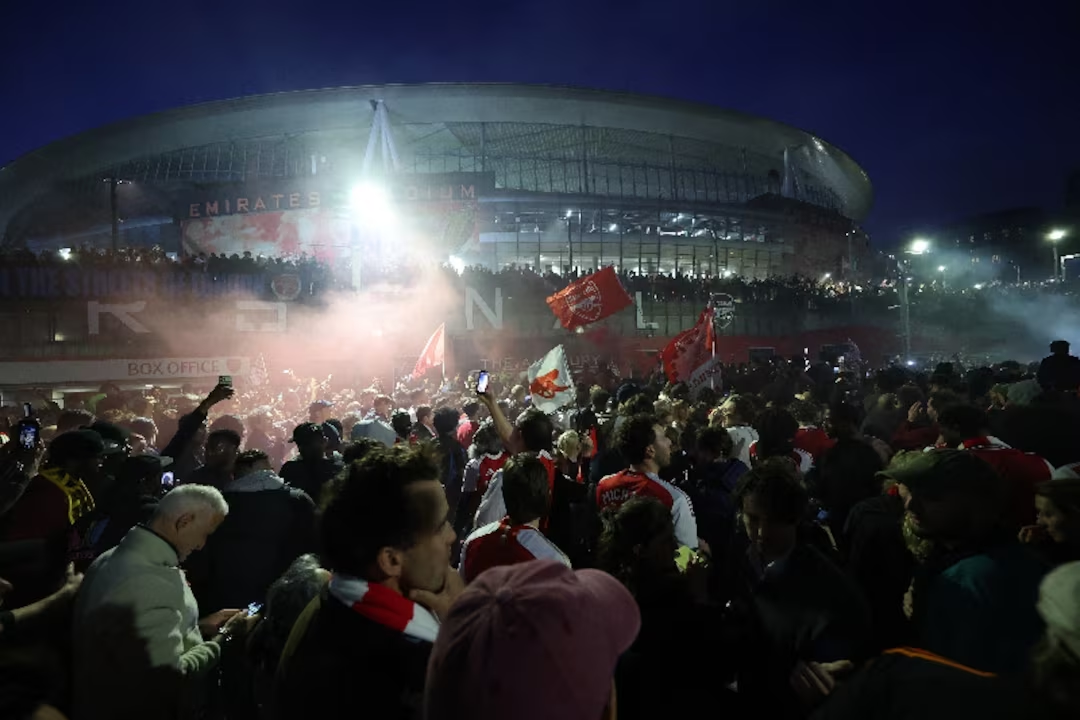
A rewritten review of Arsenal’s first Premier League title in 22 years, looking at how the decisive final week changed the mood around the club.

A longer rewritten review of Arsenal’s Champions League semi-final win over Atlético Madrid, focused on control, clean sheets and the final-step pressure.