
Football · May 06, 2026
Bayern Munich vs PSG: Champions League Semi-Final Review
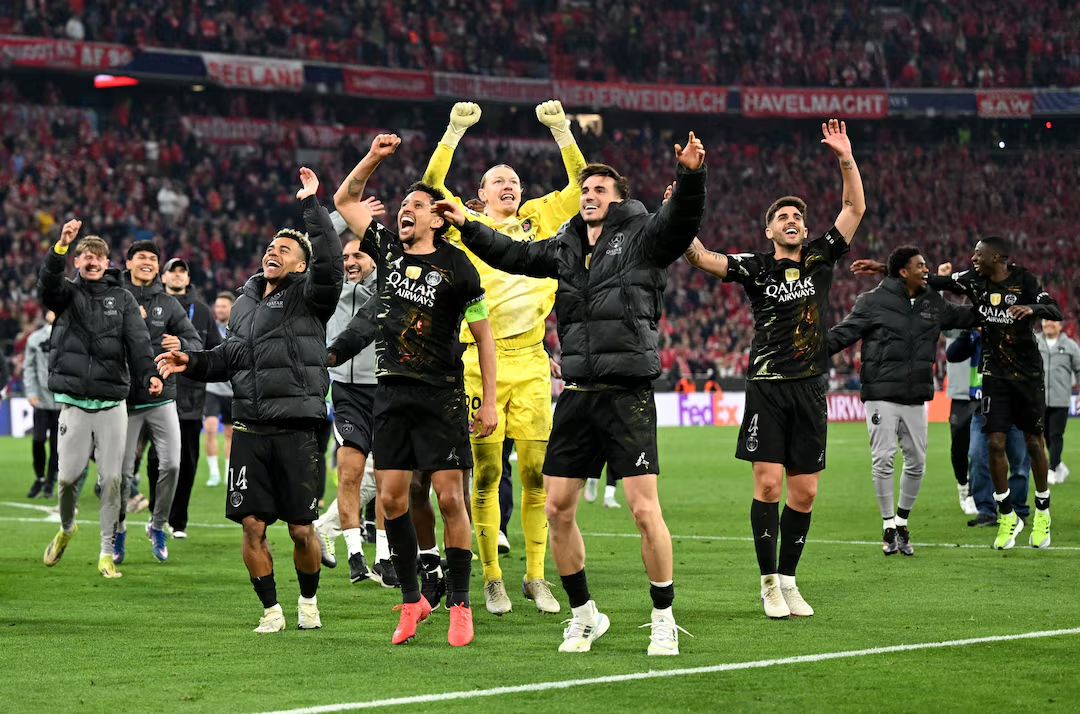
PSG survived pressure in Munich by defending the tie’s emotional centre as much as the penalty area.
Football · May 06, 2026
PSG survived pressure in Munich by defending the tie’s emotional centre as much as the penalty area.
PSG arrived in Munich with a narrow advantage and a dangerous assignment: protect the tie without surrendering the night. Bayern had the crowd, the ball for long stretches and the urgency of a team trying to keep a treble chase alive. PSG had to make the match uncomfortable for the home side without losing their own counter-attacking threat.
The final aggregate score tells a story of fine margins. The tie was not settled by PSG controlling every minute; it was settled by their ability to keep Bayern’s pressure from becoming clean, repeated chances. That is a different kind of dominance, but in a semi-final it can be just as decisive.
The early Dembélé goal changed the psychology of the second leg. Bayern suddenly needed more than simple pressure. They needed precision, speed and a way to force PSG out of their compact shape. The longer the match stayed in that pattern, the more the aggregate lead shaped every decision.
Bayern pushed PSG backward and created enough territorial control to make the stadium believe. Yet many of their attacks ended with shots from difficult areas or crosses that PSG could defend facing forward. The home side had possession, but PSG kept much of it at a manageable distance.
The key stretch came between Bayern’s response to the early goal and the late Harry Kane equaliser. That long middle phase was full of pressure, but not enough clarity. PSG’s defensive spacing forced Bayern to work around the edges, and each missed chance made the clock a louder part of the match.
Kane’s stoppage-time goal gave Bayern a final emotional spark, but it arrived too late to change the route of the tie. By then PSG had already absorbed the main storm and turned the second leg into a test of Bayern’s patience.
PSG’s most valuable work was done without the ball. The distances between midfield and defence stayed tight enough to deny Bayern easy central combinations. When Bayern moved wide, PSG were quick to compress the box and make the final pass harder than the build-up.
Bayern’s frustration was understandable. They had enough possession to expect more, yet not enough clean looks to truly tilt the tie. Their best sequences required perfect timing, and PSG’s defensive discipline kept interrupting that timing before the final action could arrive.
For PSG supporters, this was the kind of European night that can be remembered as proof of maturity. The club did not simply attack its way to another final. It defended, suffered and stayed composed when the match demanded patience.
For Bayern, the review is more painful because the tie remained alive until the end. Their late goal showed the threat was real, but it also underlined the issue: too much of the night was spent chasing a moment that came only when time had almost run out.
PSG’s draw in Munich was not a comfortable result, but it was a successful one. They scored early, defended with focus and trusted the aggregate lead to do some of the emotional work.
The match became a study in how to survive elite pressure. Bayern asked enough questions to make it tense, but PSG had just enough answers to return to the Champions League final.
Further reading
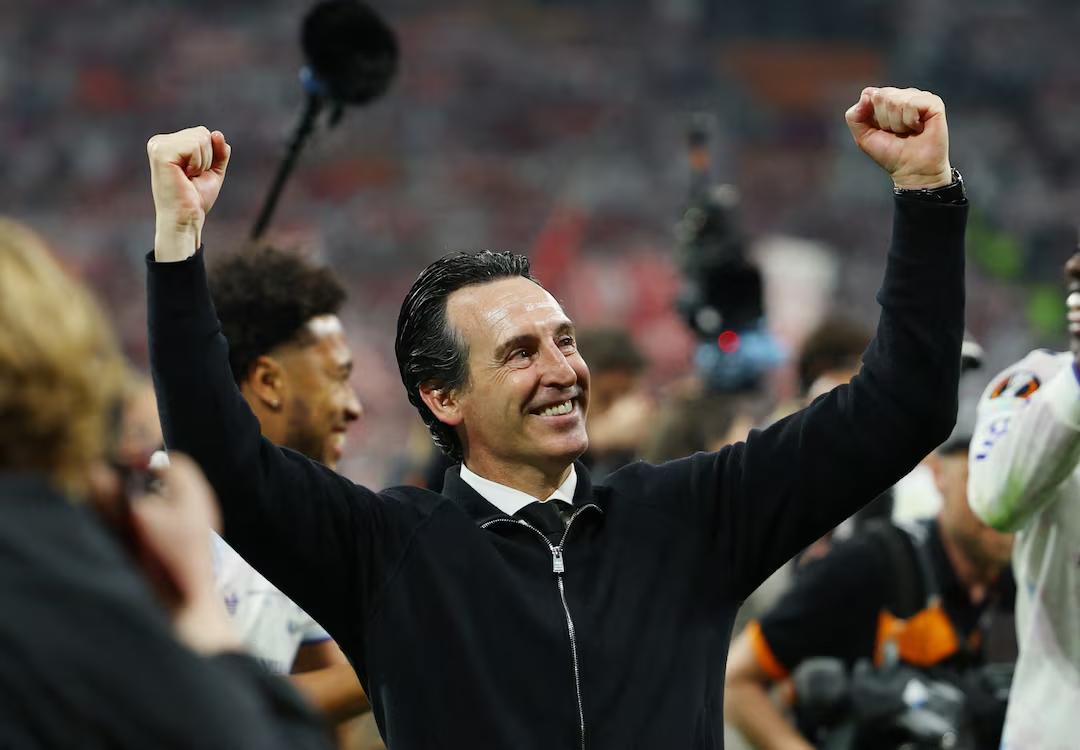
A rewritten long-form event review of Aston Villa’s 3-0 win over SC Freiburg in the UEFA Europa League final, with the focus on tempo, control and what the result changes for the club.
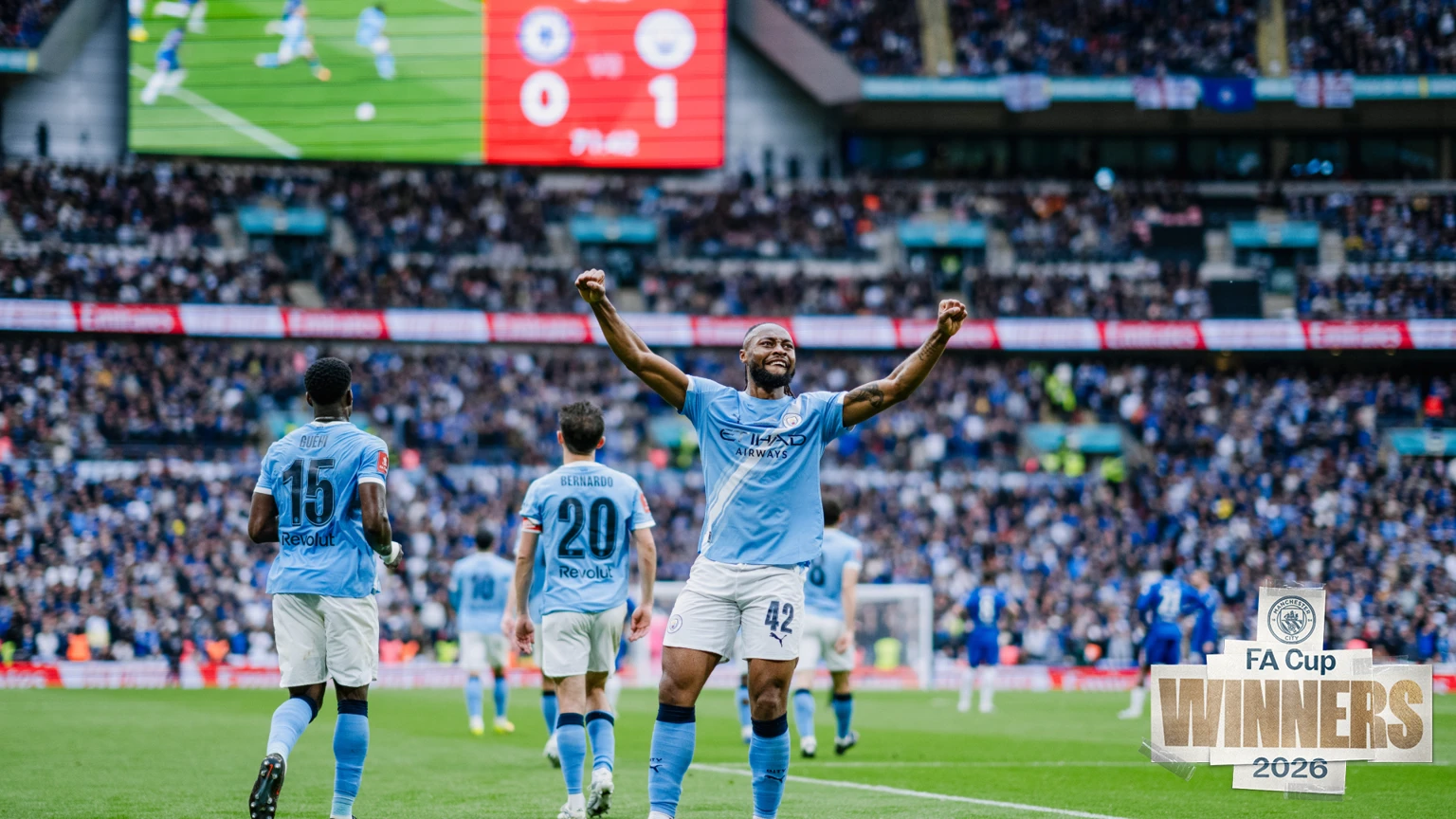
A long-form rewrite of Manchester City’s 1-0 FA Cup final win over Chelsea, focusing on Semenyo’s decisive finish and the rhythm of a tense Wembley match.
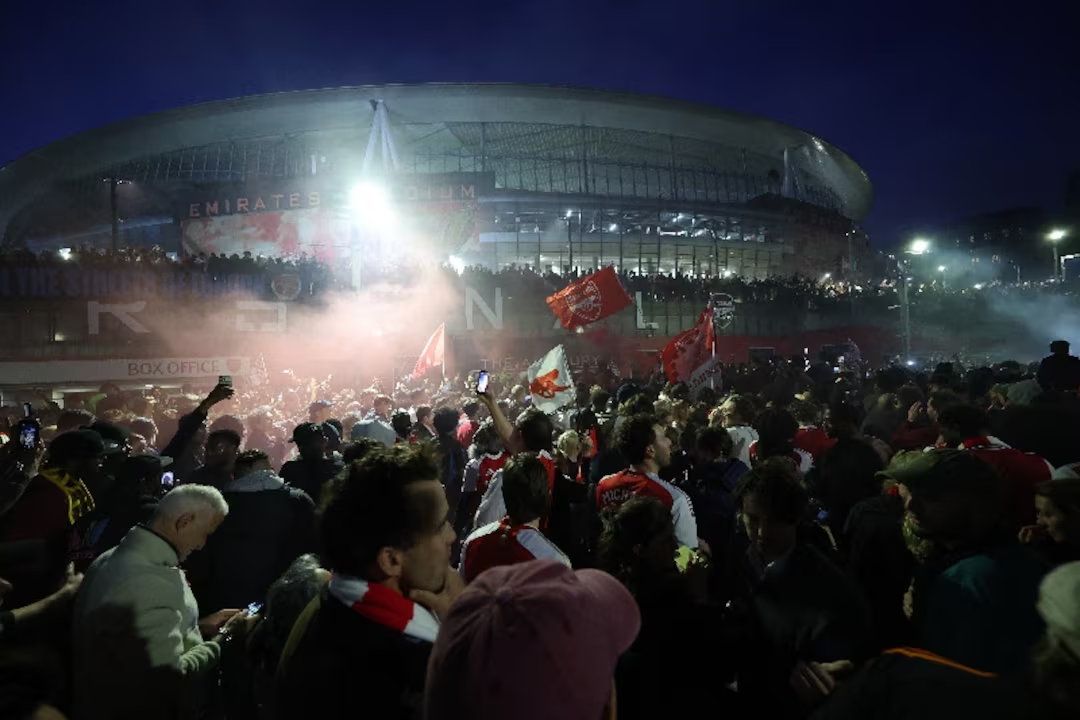
A rewritten review of Arsenal’s first Premier League title in 22 years, looking at how the decisive final week changed the mood around the club.